
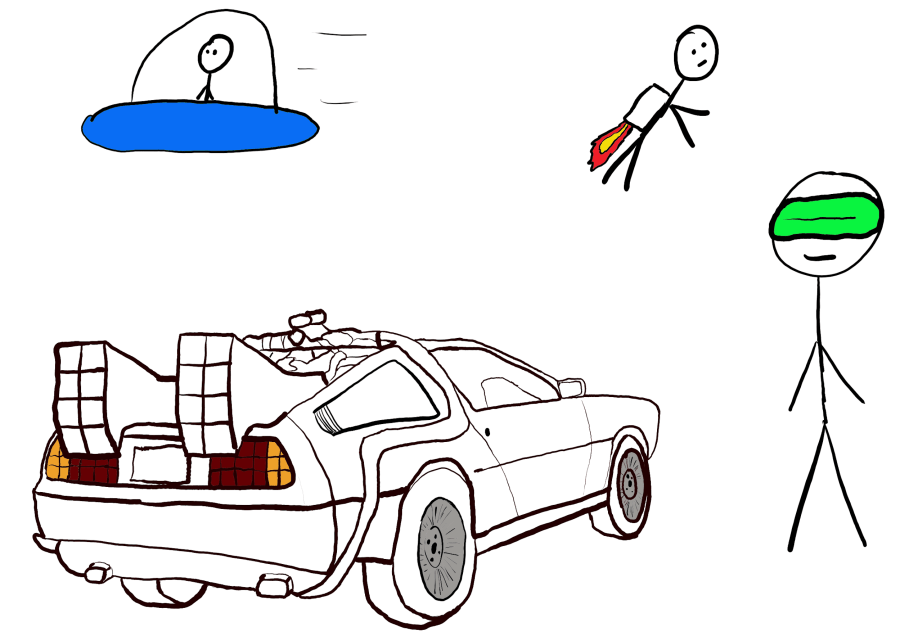
We live in a wondrous age. Science, medicine, and (arguably) society have never progressed at such a pace. Tech firms from all over the world are routinely presenting products that amaze us; products that would come across as magic only a decade or two ago. Yet we seem to be desensitized by their regularity.
While it is difficult to objectively measure the rate of technological progress, experts agree that the rate at which we are advancing is accelerating. Ray Kurzweil, one of the world’s foremost futurologists (Bill Gates called him “the best person I know at predicting the future of artificial intelligence.”), claims that our overall progress is doubling every decade. That means that the 21st century won’t bring forth one hundred years worth of progress, but something closer to 20.000; twice as much as we’ve advanced since the beginning of civilization.
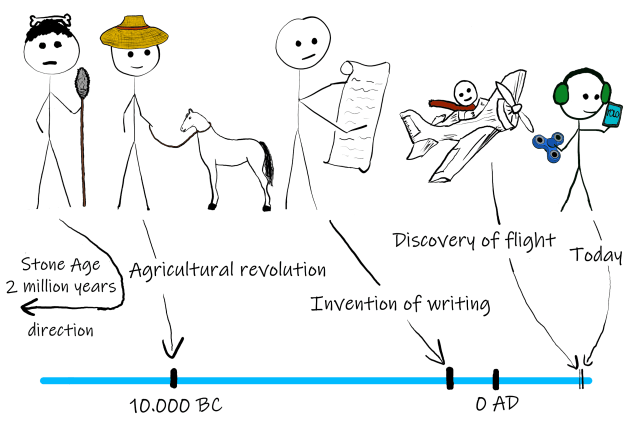
That makes predicting the future very, well, unpredictable. But that doesn’t stop people (myself included) from trying to make educated guesses. And that’s going to be the gist of this post. In order not to embarrass myself too much (I’m far from being a professional futurologist) I’ll focus on projects that some of the biggest tech giants are already working on today.
Let’s start with one of the most valuable companies in the world – Apple. Apple was founded in 1976 by Steve Jobs, Steve Wozniak, and Ronald Wayne and first developed the Apple I personal computer.

More than 40 years after their humble beginnings in Jobs’s garage Apple became the first trillion dollar company, in large part thanks to the success of their iPhone lineup. They will obviously continue to develop newer and better iPhones, iPads, and Macs, but what about their other plans for the future?
(Disclaimer: Parts of this post will be based on rumors and conjecture, so take everything written from this point onwards with a grain of salt.)
Some of the most exciting advances of recent years come from the field of virtual and augmented reality. In case you’re not familiar with these terms, virtual reality (or VR for short) usually involves wearing some sort of glasses with embedded displays (and headphones) which replace your field of view with an artificial one; for example with a “360° video” or with a videogame environment.
Augmented reality (AR) is a similar concept, except that in this case the real world isn’t replaced with a virtual one. Instead, computer-generated images are superimposed over our actual surroundings. Companies like Facebook, Valve, Samsung, Sony, HTC, Magic Leap, Google, and Microsoft are all working on their own versions of these technologies, but rumor has it that Apple is developing something similar as well.
We can’t be sure if they’re developing a purely software solution, or if they’re also designing the hardware. Apple has been dropping hints (like hiring a VR researcher, a Microsoft’s HoloLens engineer, and acquiring a computer vision startup) that they’re developing their own take on virtual reality. It is not clear whether Apple is designing a VR, AR, or mixed reality headset/software, but whichever it may be they are probably the most likely to bring the technology to the masses. (Unreliable) rumors suggest that (the uninspiringly named) Apple Glasses might see the light of day sometime in 2020.

One project that you probably have heard of, is the development of an Apple car. Apple started with project Titan in 2014 and had more than 1000 people working on it at one point. The focus of the project reportedly shifted towards developing software for other car companies, but some recent developments point towards a possible revival of the project.
So, what would an Apple car (iCar?) be like? While Apple is often thought to be the first to bring something to market, that is very rarely the case. What Apple is great at though, is implementing such technologies in a way that is accessible and attractive to consumers. Apple realizes that the future of transport lies in self-driving cars. A lot of car makers, most famously Tesla, have been working on developing such technologies for years, so how does Apple, a tech company, plan to compete with already established automakers?
One major advantage that Apple has over car companies is that hundreds of millions of their iPhones are brought along on car rides on a daily basis. This massive amount of geolocation data combined with their Apple maps opens up a sea of possibilities.

Tesla already uses the GPS systems in their cars combined with the car’s onboard sensor and telemetry data to accurately measure every stretch of road that their cars drive on. Basically, their fleet of cars uses machine learning algorithms to improve their collective capabilities, effectively learning from each other. And Apple could probably use their (much larger amount) of data to implement a similar solution, though they are lacking the information that Tesla gets from the telemetry on their cars, their cameras, and radar systems.
But it wouldn’t be like Apple to just build a car, slap an autonomous driving system onto it, and call it a day. For them to attract the masses (or at least a large number of people who’ll be able to afford one), they’d have to implement some features that other companies don’t have, or haven’t yet executed well enough. As Apple likes to put it, they’d have to “reinvent” the car.
What could that reinvention look like? By removing the need for a driver and seats which face the road, you could turn the car cabin into a lounge area or even sleeping pod for longer journeys which would completely transform your daily commute.
I believe that Apple (and other car makers) could make owning a car a thing of the past. By introducing a car-sharing service they could drastically reduce the number of vehicles that they’d have to produce (a large obstacle in the automotive industry, especially for new carmakers), eliminate the expenses of owning a car, and reduce traffic in urban areas.
Imagine a future where you use an über-like app to call a driverless car to your doorstep. As soon as you enter the comfortable living-roomish cabin, your iPhone connects to the car’s entertainment system and starts playing your music or videos, and automatically adjusts your seat settings, as the car quietly whizzes off towards your destination. You catch up on the news and answer some work emails while en route to your office and your iTunes account automatically deducts the fare from your credit card. If you have a longer commute and would prefer to get some sleep, you can choose that option and have the car reconfigure to accommodate a comfortable bed. Unless you paid a premium, the car could find an optimal route to your destination, while also picking-up and dropping-off other commuters.

The car (if we’ll still call it that) could feature vending machines or a big screen which would have access to all of the media on your phone (for instance Netflix, YouTube, or some game-streaming services).
Naturally, people are also imagining more intimate uses for self-driving vehicles. But such things wouldn’t happen in car-sharing scenarios (almost ever) since those cars will most likely be fitted with cameras on the inside of the cabin (Tesla’s model 3 already has one).
Admittedly, such a car-sharing service is being worked on by other companies (both Tesla and Über are working on their own versions of this) but, as was the case with smartphones, Apple getting involved in the field would help accelerate consumer adoption.
The topic of self-driving cars offers a nice segue to the next company (and one that we’ve mentioned numerous times already) on our list – Tesla. It was founded in California in 2003 by Marc Tarpenning and Martin Eberhard. Soon after they received backing from several investors, most famously Elon Musk who became the CEO and figurehead of the company.
When they started out, Tesla’s goal was to accelerate the rate at which we rid ourselves of our dependence on fossil fuels and adopt electric vehicles, thus lowering humanity’s impact on the environment. Whether you believe that their motives are altruistic or not, there’s no denying that their plan is working – the entire automotive industry has been shaken up and is now playing catch-up with Tesla.
Their first car, the Tesla Roadster, proved that electric cars can be fun, the Model S showed that they can be sexy, and the Model 3 is attempting to bring affordable electric vehicles to the masses. At the entry price point of 35.000 dollars (though you can’t buy it in this configuration yet) it’s far from cheap, but Tesla has successfully pushed traditional automakers to action – all the big players are being forced to embrace electricity as the future and most already offer their own zero-emission models.
So, is Tesla done evolving, since they arguably achieved their lofty goal of shifting the direction of the automotive industry away from fossil fuels? Not quite. We covered self-driving cars already, so let’s focus on other techs that they’re working on.
Love him or hate him, an important part of what differentiates Tesla from other companies is their CEO, Elon Musk. While he might be best known for his position at Tesla, Musk came to prominence when he co-founded PayPal. Today he is the CEO of the rocket company SpaceX (they’re aiming for a manned mission to Mars in 2024) and Neuralink – a startup trying to design a brain-machine interface (think mind-reading computers which could also “write” information into your brain).

That puts Tesla into a unique position to share talent, resources, and technology between these companies. One (equal parts cool and crazy) example of this is the upcoming Tesla Roadster 2.0’s optional SpaceX package; an arrangement of 10 small rocket thrusters around their 2020 super-car which are intended to improve acceleration (the car is set to be the fastest accelerating production car even without the rockets) and cornering speed.
But that is today. What about tomorrow? Or, more realistically, a few decades from now? While Tesla might have already proven that electric cars can replace and improve on gas-guzzling cars, SpaceX’s mission is far from over.
The goal of the US-based rocket company is speeding up the colonization of Mars (and one day the rest of the solar system). While the general public is more interested in things like Musk sending his car into space, the scientific community is excited about the strides that SpaceX is making in reducing the costs of space missions. Their reusable rocket thrusters might reduce the costs of rocket launches by up to a factor of 100.
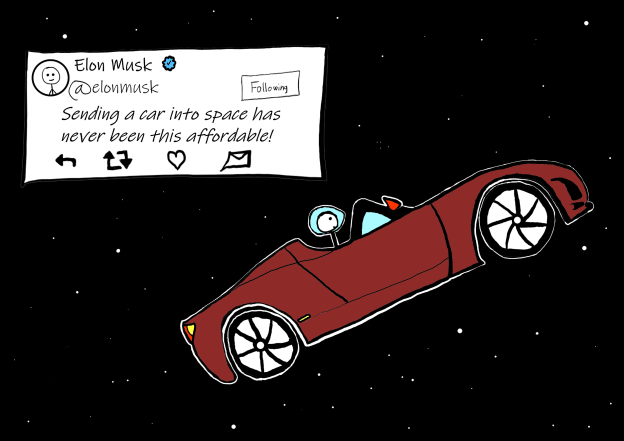
You might be asking yourself what this has to do with Tesla. Well, we’re getting there. Once SpaceX finishes their interplanetary BFR rocket and starts colonizing Mars, there’ll be plenty of obstacles to overcome. Enter The Boring Company. A subsidiary of SpaceX, The Boring Company seems to be a bit of a joke at first glance. Announced via Twitter while Musk was stuck in L.A. traffic, the aim of the venture seems to be eliminating traffic by moving it into underground tunnels.
While tunnels are far from being a new concept, the improvement that TBC is promising is in the speed and efficiency of their tunnel boring machines. Those tunnels could be used to build a complex system of tubes at various depths which would ensure a traffic-jam free commute. Part of the plan is to use such tunnels for Musk’s Hyperloop project; a futuristic transport system which could enable cross-continental travel at speeds rivaling those of airplanes. But the most ambitious by far is the potential application of this tunnel digging technology on Mars.
Life on Mars is going to be difficult. Insanely so. Between the low-pressure atmosphere and high solar-radiation, the surface of Mars is far from being hospitable to humans. One way to get around that is by building shelters. Another is by moving the colony underground. Working out most of the kinks on Earth is orders of magnitude cheaper than trying to implement such technology on another planet first.
Who knows, one day Martians might cruise around in Teslas on and under the surface of the red planet. Their Model S and X cars already offer a “Bioweapon Defense Mode” which provides the best air-filtration system on the market to the nearly hermetically sealed cabin, which could also indicate some SpaceX R&D showing up in Teslas. Just make sure to never crack the window if you’ll go for a drive across the Martian surface.
Musk is also preparing for the case of giant Martian spiders attacking the human colony; The Boring Company designed a “flamethrower” which would surely come in handy in a Starship Troopers scenario. (Disclaimer: This is highly unlikely.)

Okay, time to move on to the last tech giant on the list – Google.
The ad-fueled search giant had restructured into Alphabet in 2015, now Google’s parent company.
Founded by Larry Page and Sergey Brin in 1998, the company that became the verb for looking up information, steadily maintained its meteoric rise and became one of the most powerful companies in the world.
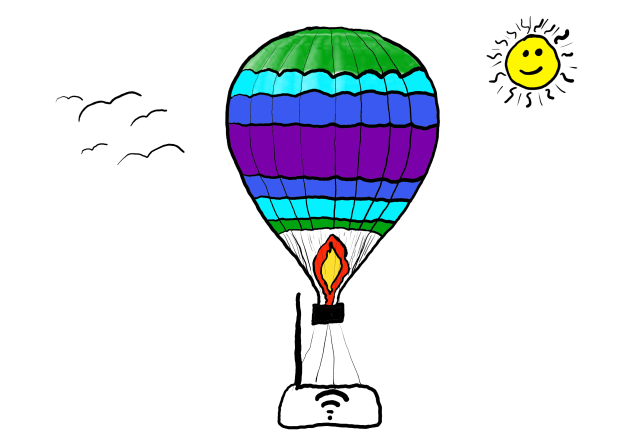
We know the drill; here are some of the things that we know they’re currently working on. Google’s secretive “X” company (formerly Google X) is working on projects like Google Glass (their controversial early entry into the smart-glasses space that wasn’t a hit with consumers), world-spanning Internet-delivering balloons (here Google’s project Loon faces some competition from SpaceX’s Starlink satellite network), their own self-driving car project (now Waymo), and a hot salt energy-storage company Malta.
The last one on the list, Malta, has just recently split into its own company. Their aim is to store excess power from renewable sources like solar and wind for times when those aren’t available (e.g. night-time or windless days) as either heat (by warming up hot salt) or cold (by cooling low-temperature antifreeze). Until such auxiliary power plants become a reality, wind and solar won’t be able to sustain the power grid by themselves.
Google also owns the AI company DeepMind which made headlines by defeating the world’s best GO player and used to own companies like the (Black Mirroresque) robot design company Boston Dynamics. That makes them the most likely candidate for a Skynet-type scenario.
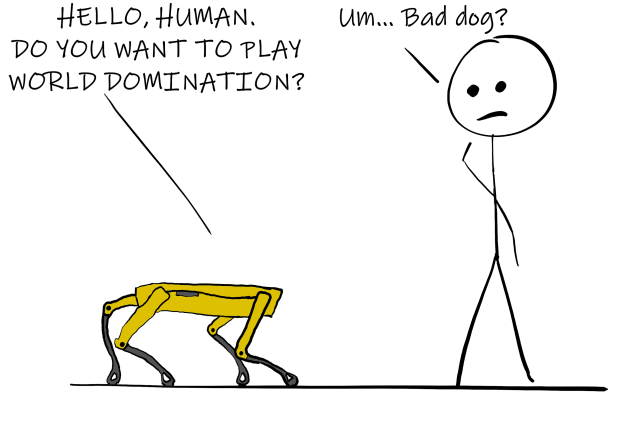
While on the topic of artificial intelligence (<— definitely click this link if you’re even remotely interested in AI), virtually all of the companies mentioned in this post are working on various aspects of AI; for instance the development of voice assistants like Siri, Alexa, and Google Assistant (if you think that there aren’t any noticeable improvements in this space, you obviously haven’t seen Google’s Duplex demo). This brings life-like natural language processing (having a natural sounding conversation with a computer) tantalizingly close. What that means for us, the consumers, is that Google’s version of the Terminator won’t have a thick Austrian accent.

The purpose of all of these advances is the same as with every other invention since humans discovered fire. To make our lives more comfortable.
Whether or not this self-driving, virtual reality, talking-robot, Mars-colonising future comes to pass, two things are for sure. The future is impossible to predict, and it’s coming faster than ever. And all we have to do to reach it is not blow ourselves up. Or fall victim to a gamma-ray burst or a similar world-ending event. Hope to see you in the future.
 Glass half cool